
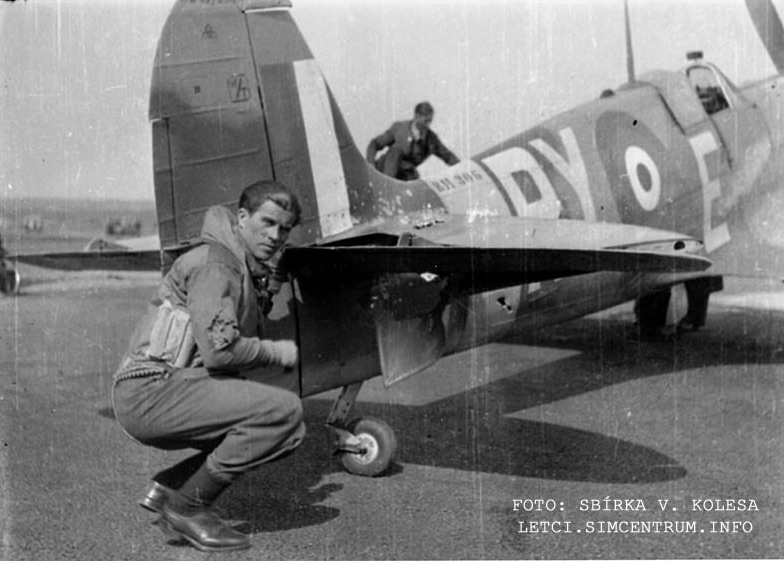
Flt Lt Václav Jícha, RAFVR, apparently inspecting damage done to his Spitfire. The tear in his clothing on his right arm suggests a near miss.
[V. Kolesa's collection: I have tried to contact him for permission to show this but have failed]

This photograph was taken on the occasion of the test flight of the first Lancaster B1 (HK535) produced at Vickers Armstrong Aircraft Factory, Castle Bromwich. The flight was piloted by Alex Henshaw, Chief test pilot at Castle Bromwich for Vickers Armstrong.
Left to right: Rosser RAF, Alex Henshaw, Ulstadt (Norway) and Václav Jícha. HK535 only lasted for eight missions and blew up east of Lille with the loss of the whole crew in early 1944.
[Photograph courtesy of Stephen P. Taylor.]
Flt Lt Václav (Venda) Jícha, DFC AFC, Croix de Guerre, Czech Pilot
Václav Jícha was born in Czechoslovakia, in Dnesice, on 10th February 1914. Interested in flying from an early age, he gained his pilot’s licence in 1933. He soon became a well-known figure on the club flying scene but was conscripted into the army in 1935. His flying experience was recognised, and he was selected for pilot training, gaining his wings on 31st March 1937. Jícha quickly established a reputation as a skilful pilot and, having taken the decision to remain in the Czech Air Force, he was later to become a member of the Air Force’s aerobatic team.
In October 1938, the Sudetenland, Czechoslovakia’s fortified border area, was occupied by German forces as a consequence of the Munich Agreement. When, in March 1939, the whole of Czechoslovakia fell to Hitler, Jícha left the country and escaped first to Poland then to Cherbourg via ship from Gdynia. A short spell in the French Foreign Legion ended when Jícha was transferred to the French Air Force. During an intensive period of action, Jícha shot down an Me109 on the 20th May and a Do17 on the 21st. He shared the destruction of a Do17 on the 24th and destroyed a Hs 126 on the 5th June.
Overwhelmed by swiftly advancing German forces, Jícha made his way to Port Vedres on the Spanish border and sailed to Oran on the 24th. By the 12th July he had successfully reached Liverpool. He joined the RAF and was posted to 310 (Czech) Squadron at Duxford by the 6th August. After spells in a variety of RAF squadrons including 238, 1, 17 and 313 squadrons, Jícha’s unusual skills as a pilot and a technician were recognised and he was transferred to 45 MU at Castle Bromwich in 1943 where he became a test pilot on new production aircraft. By May 1944, he had flown 822 hours on test flights and had survived fifteen forced landings (engine failures were very common) including nine where he landed the aircraft intact with undercarriages down.
[I am indebted to the Battle of Britain Memorial Trust for much of the factual details noted above (with the exception of the photograph) and would state their copyright to the material - see www.bbm.org.uk/airmen/Jicha.htm
Jícha was taken off Test Pilot work (thanks to a new regulation which forbade foreign pilots from flying aircraft deemed to be on the secret list) and he was posted to 9 Maintenance Unit, Kinloss. It wasn't a move he was at all happy with. On the 1st February, 1945, he was a passenger on a cross country training flight in Anson NK945. Flt Ronald Cameron Ferguson, the pilot, became disorientated in a heavy snowstorm, misjudged the height and flew into Turf Law in the Lammermuirs. Jícha, Ferguson and F/O Arthur S. Davidson were killed. The Anson appears to have struck the slopes obliquely and skidded along the hillside until it toppled nose-first into a small ravine. In recent times a survey of the site was carried out by an Air Crash Archaeology and Investigation Society, led by Kenny Walker, and some pieces of debris were found.
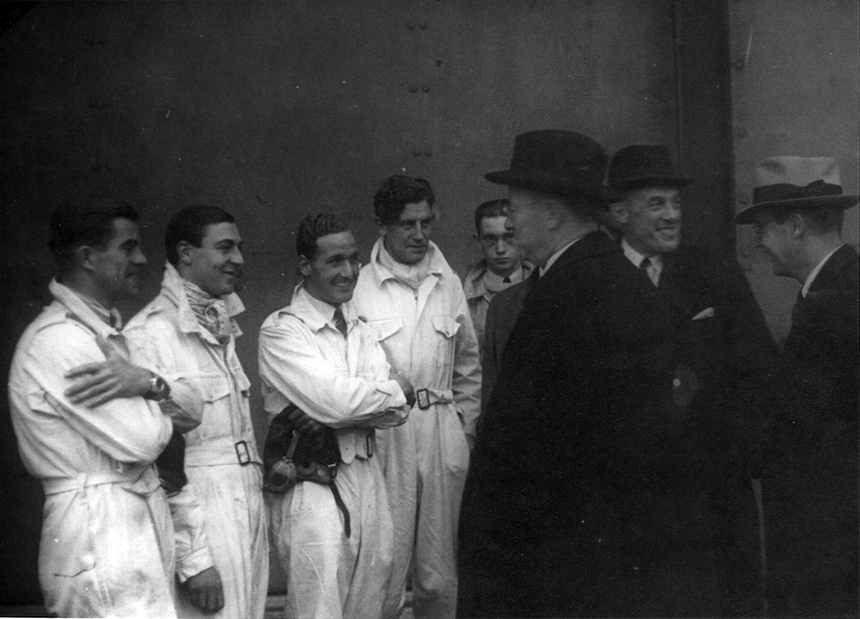
A VIP visit, probably in early or late 1943 with Jícha on the left, Rosser, Alex Henshaw and an unknown airman.
The others may be Americans and it’s possible the tallest in the middle is US Ambassador Joseph Kennedy, father of President John Kennedy.
Photograph courtesy of Stephen P. Taylor.
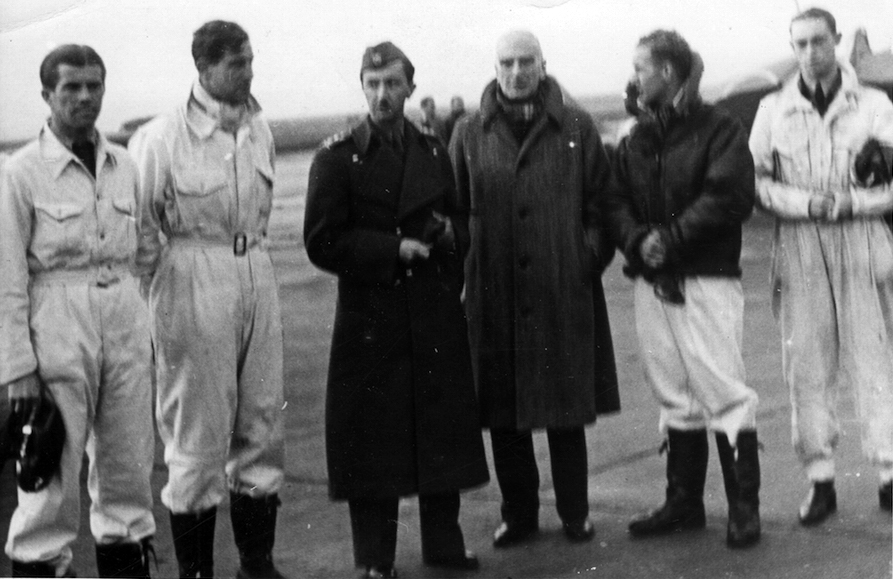
Jícha on the left, Ulstadt, the Regent of Iraq (in uniform), Bonner Dixon (Vickers Armstrong Director at Castle Bromwich), Alex Henshaw and possibly Brew (a test pilot later killed in a Spitfire crash).
[I am very grateful to Stephen P. Taylor for the above three photos and their identifications]
Confirmation of Jícha's death
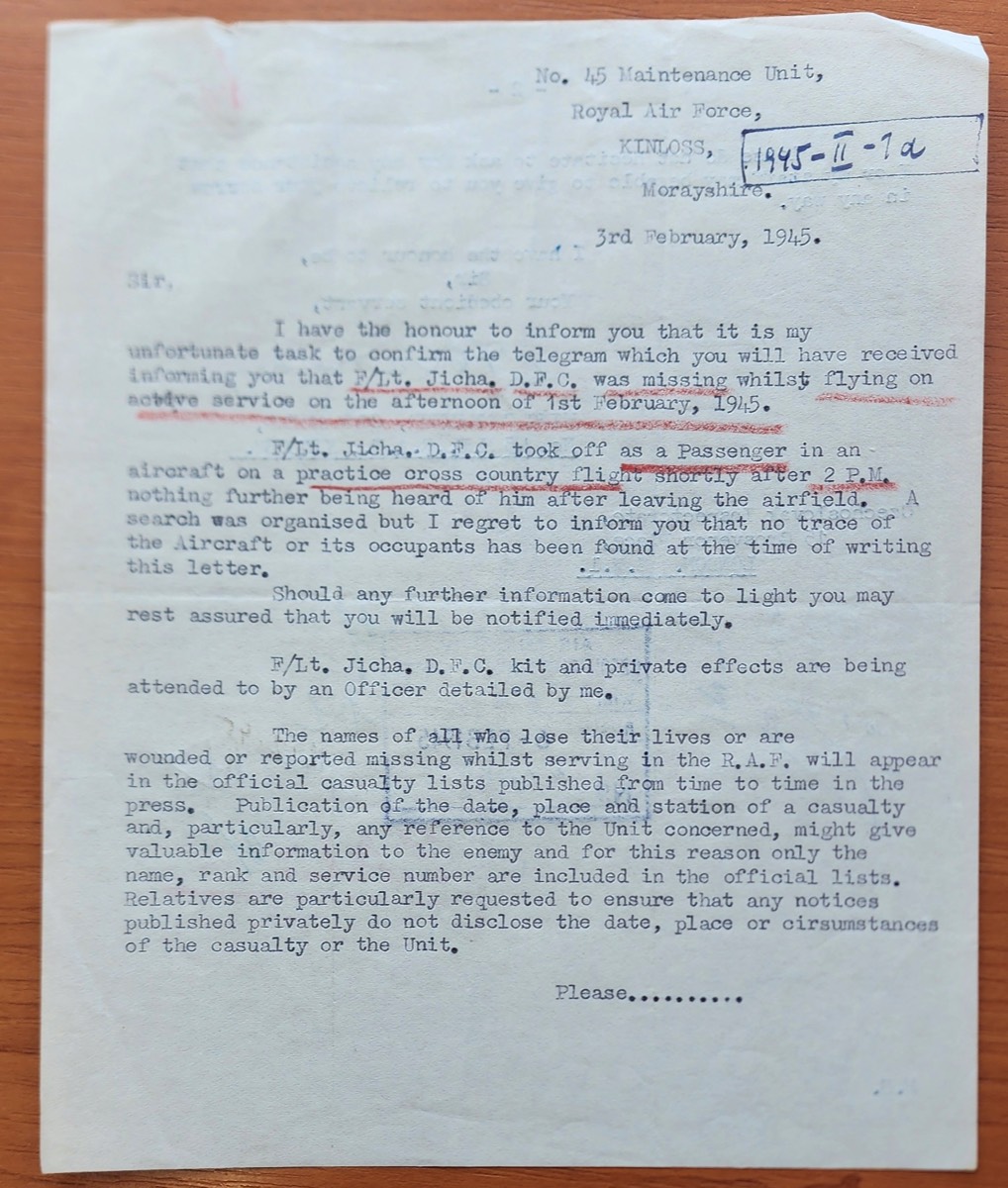
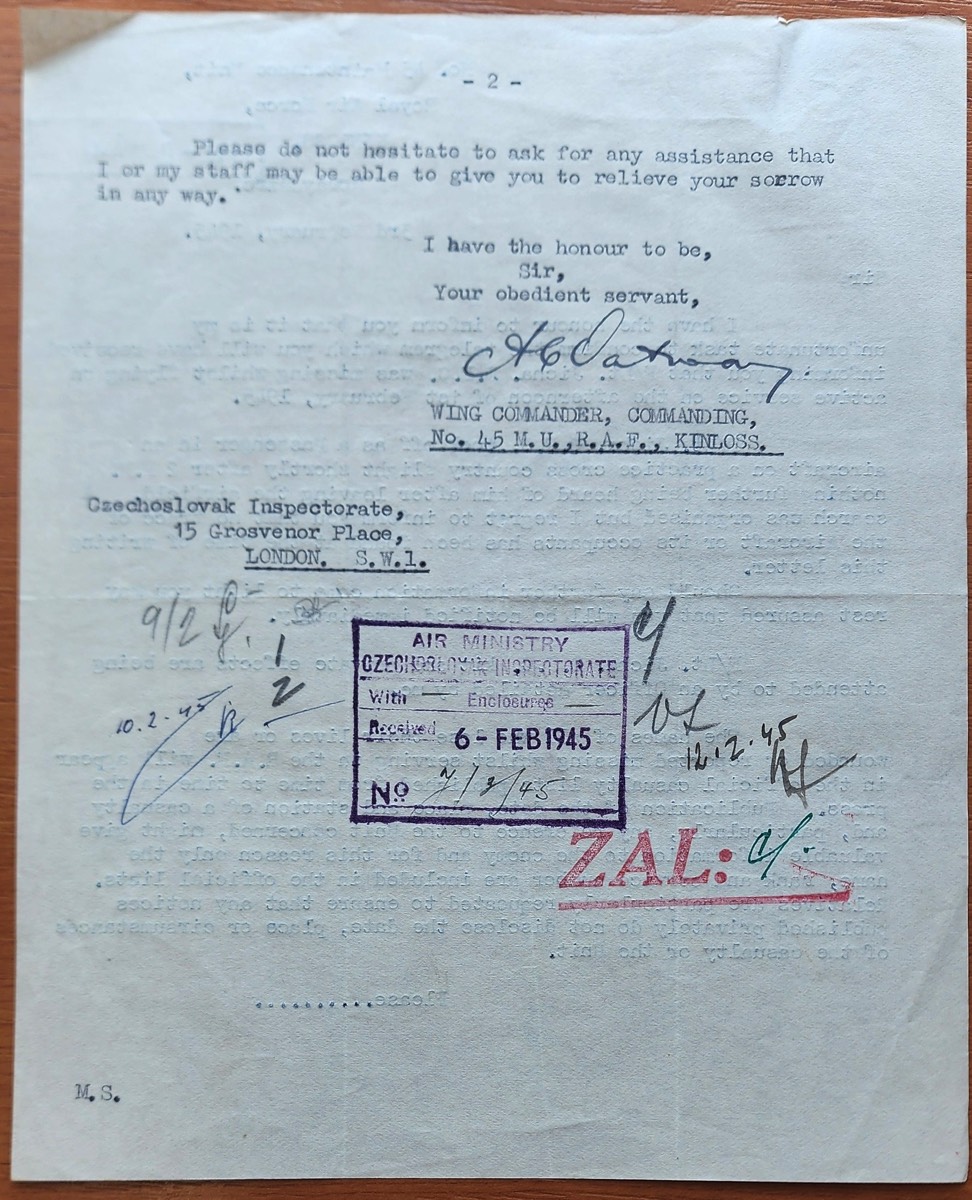
Official communication of the loss of Anson Mk1, NK945, written by the CO of No 45 MU, Kinloss, informing the Czech authorities of the loss of Flt Lt Jícha. This clearly shows that Jícha was a passenger on this aircraft. This was written on the 3rd February, 1945, when the whereabouts of the crashed Anson was still unknown.
[Courtesy of VUA/VHA Praha, Czech Republic
Central Military Archives/Military History Archives in Prague]
How myths can flourish.
Part of the explanation of this myth origins lies in the loose words used in the initial reports of Jícha's death. In the two documents shown below, the authors use the phrases, '…found by crashed aircraft…' and '…found with the crashed aircraft…'. While this leaves room for the idea that he initially survived the crash with sufficient strength to crawl away for help, it also firmly places Jícha's body in or near the plane and not some distance away. I believe we can be fairly confident that Jícha was, sadly, lost in the initial crash.
Vaclav Jicha lies buried in St Mary’s RC graveyard, Haddington.
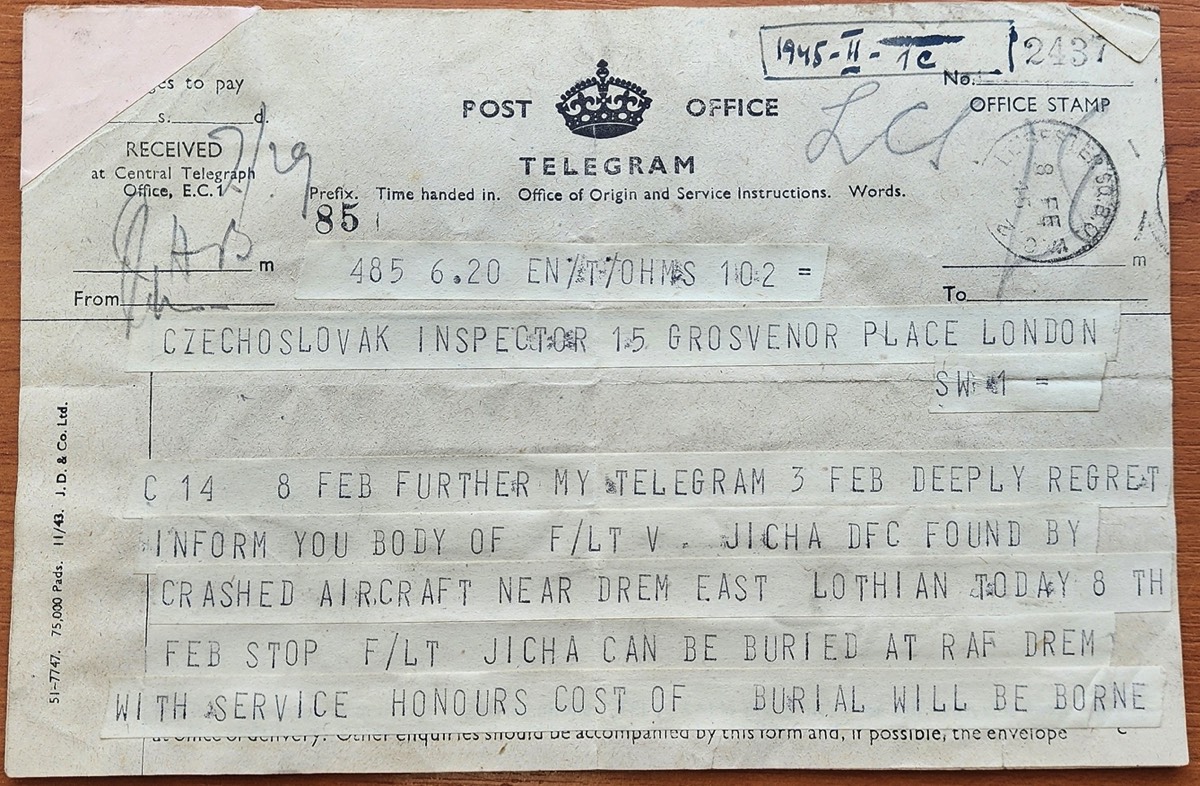
Telegram announcing the discovery of Jícha's body. Note that the initial suggestion was that he would be buried near Drem.
[Courtesy of VUA/VHA Praha, Czech Republic
Central Military Archives/Military History Archives in Prague]
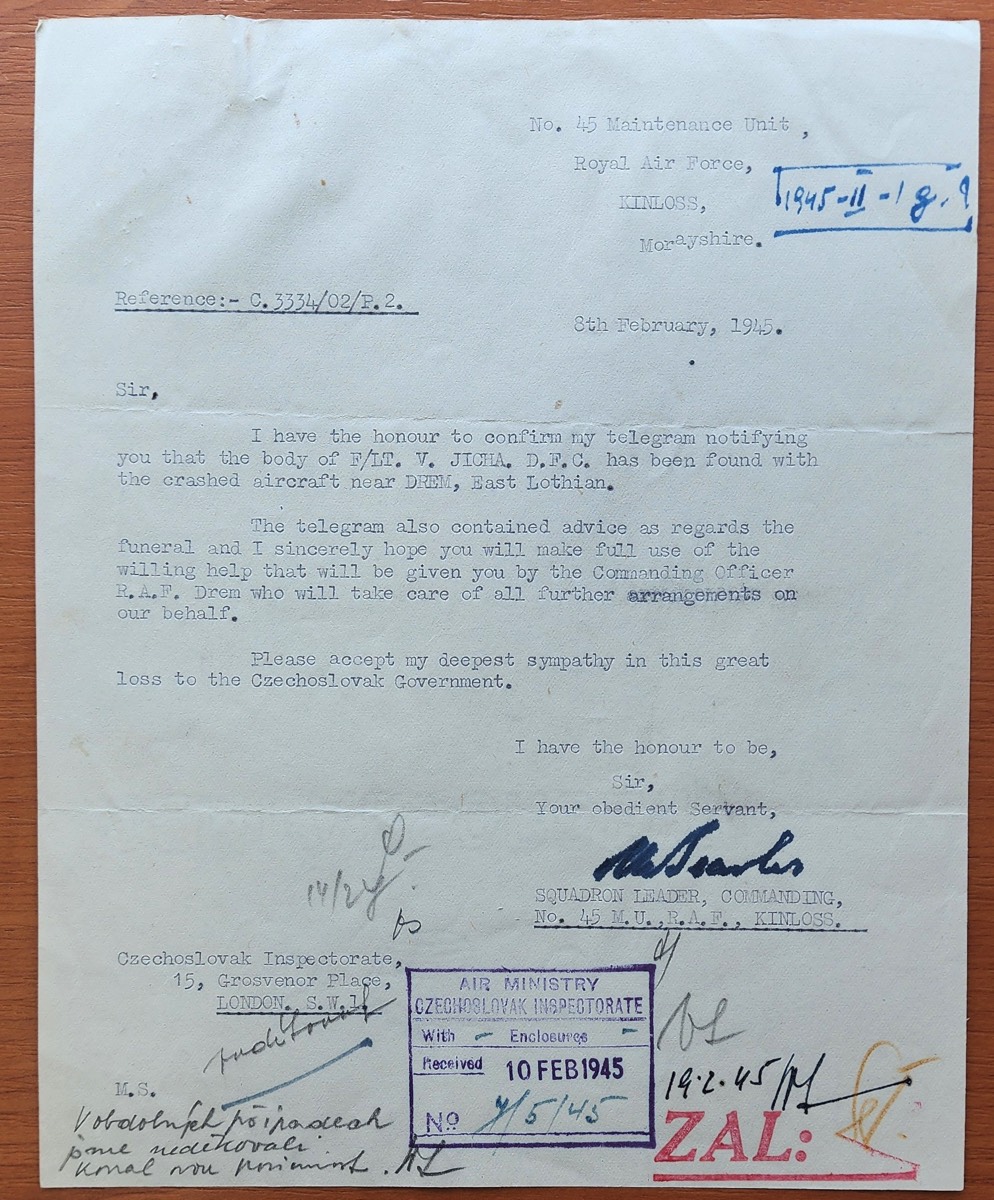
Official letter confirming the discovery of Jícha's body.
[Courtesy of VUA/VHA Praha, Czech Republic
Central Military Archives/Military History Archives in Prague]
My very sincere thanks to Milena Kolarikova for access to the above four documents.
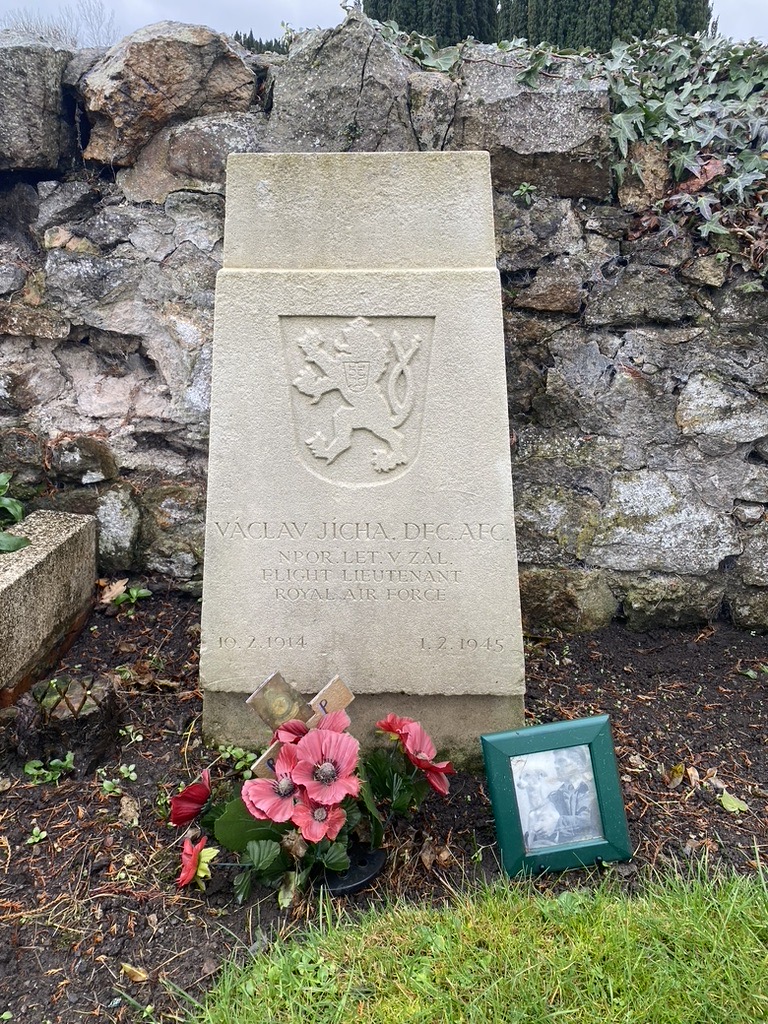
Václav Jícha's gravestone in St Mary's Roman Catholic cemetery, Haddington.
[David Haire]
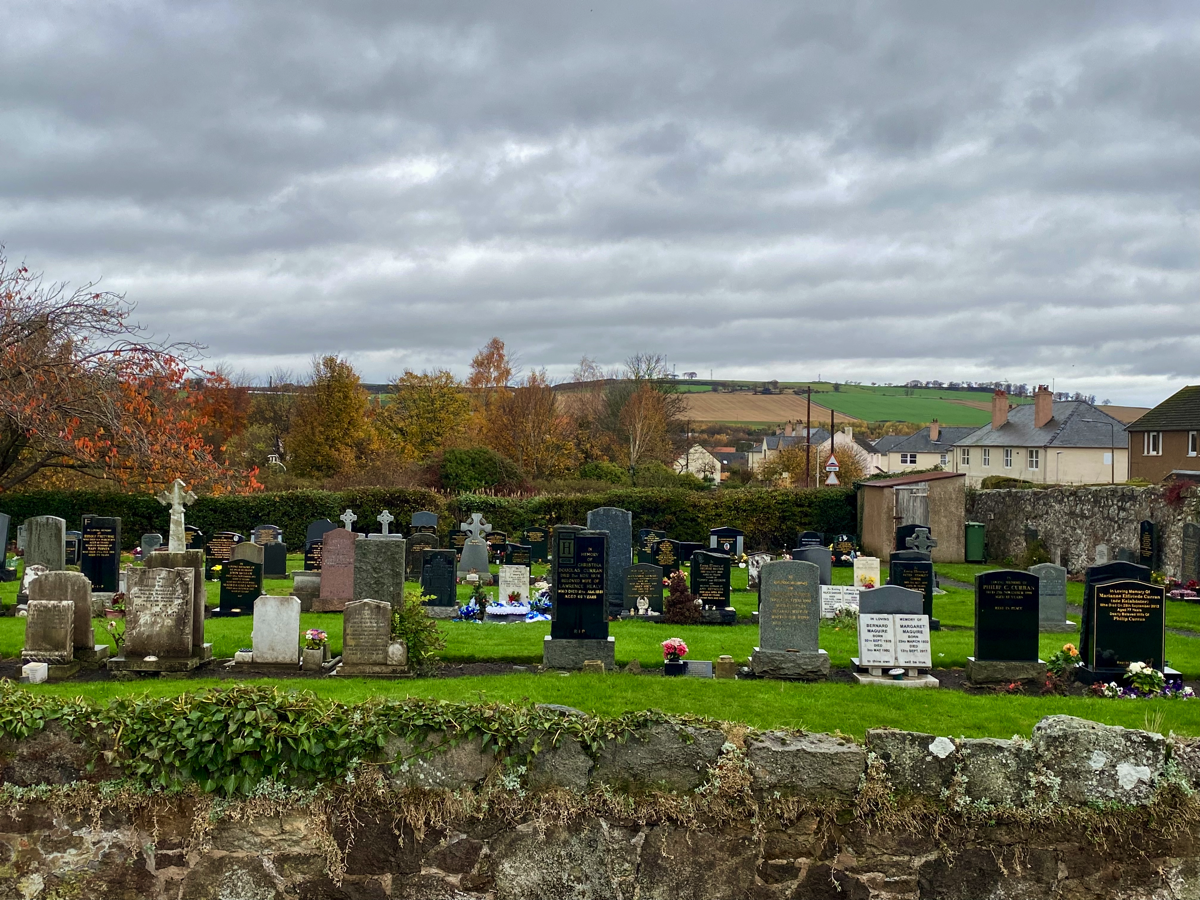
General view of St Mary's RC cemetery, Haddington, East Lothian., looking roughly south to north. This is Václav Jícha's final resting place. It's in a peaceful corner of the town of Haddington, amidst the rolling and gentle farmland of the county.
[David Haire]
More about Václav Jícha
Juliette Liska
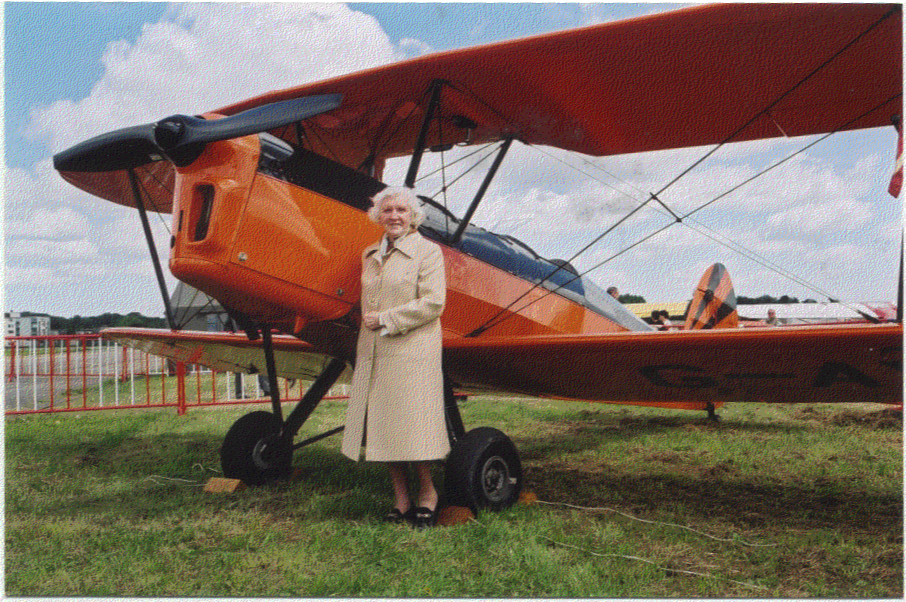
Juliette (Julinka?) Liska standing beside a Tiger moth.
Juliette Liska
Prior to the war, when he was twenty-four, Jícha had flown in the Aero Club of Prague and there he had met Juliette Liska, aged eighteen. Juliette appears to have been born in Belgium after her father moved the family there as he followed his career in brewing. She was sometimes called Julinka, a Czech pet name for Juliette. 1 She was a very unusual young lady having gained a private pilot's licence while living in Belgium. She and Václav appear to have formed quite a romantic attachment to each other, partly because they shared a common passion in flying and Vaclav became her fiancé.
Daughter of a First World War submarine commander, Juliette’s own wartime experiences are well worth recording. I interviewed her on the last occasion when she came to visit Vaclav’s grave, a journey she had made several times. Unfortunately, she wouldn’t allow us to make any audio or visual recording of the event, so I have to rely on notes. In 1940, the war trapped Juliette in Brussels where she was a student. She took the risk to fight back and said that she had joined the Comet escape line aiding escaping airmen return to the UK.
She bravely carried out this dangerous work until she was betrayed and arrested on the 5th February, 1943, and taken to Sangerhausen concentration camp, a sub-camp of Buchenwald. She was then sent to a mobile labour group given the task of repairing bomb damage to railway lines. She and her work detail were moved all over Germany by train, moving to wherever air raid damage needed repair. During this period, she survived, quite miraculously, no less than fifty-seven air-raids. In one she remembered being in a carriage blown on its side by the blast of a bomb and being straddled by the corpse of a fellow worker.
When this work ended, she was sent to a factory where she again resisted and, like many of her co-workers, did all she could to sabotage the work. Again, she had to endure air raids. However, she was one of the lucky ones who survived and was eventually released by the Americans. She ended the war working with the Americans on roadblocks trying to identify German war criminals. Clearly, she was an exceptional lady who was also exceptionally lucky.
After the war ended, Juliette visited Václav’s parents and only then discovered that he had died. She later married but, in her old age and after her husband had died, she began to visit Václav’s grave in Haddington. Hearing of this, Bill Nicholson, Area Manager Scotland of the Battle of Britain Historical Society, arranged for a Spitfire to overfly Vaclav’s grave on the 7th September 2007, when Juliette was eighty-five. She herself died not long afterwards.
1. Thanks to the Free Czechoslovak Air Force Association for this name clarification.
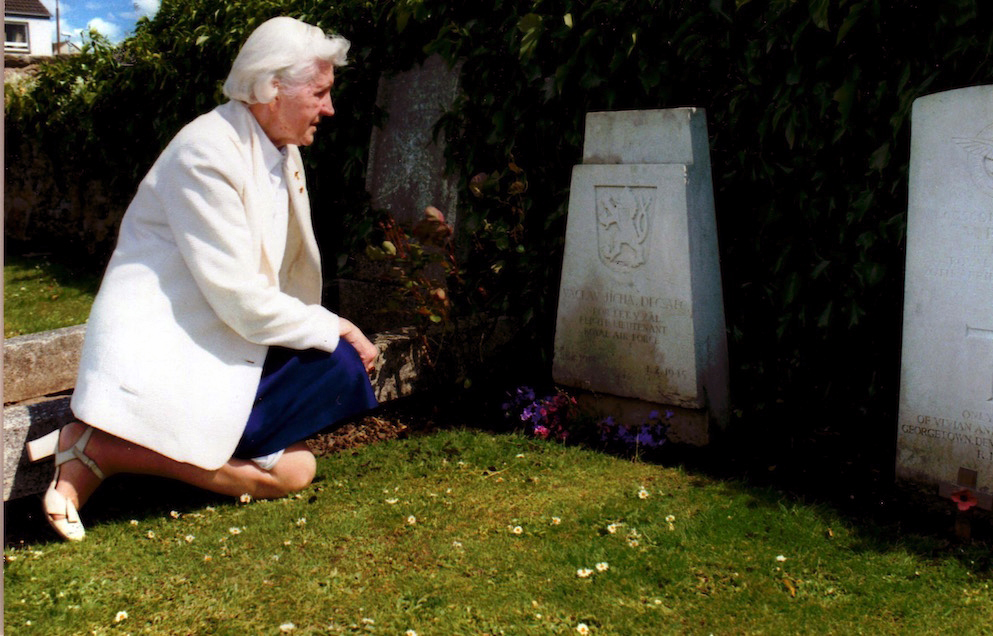
Above: Juliette Liska by Václav Jícha’s grave in St Mary’s RC graveyard, Haddington, in 1999.
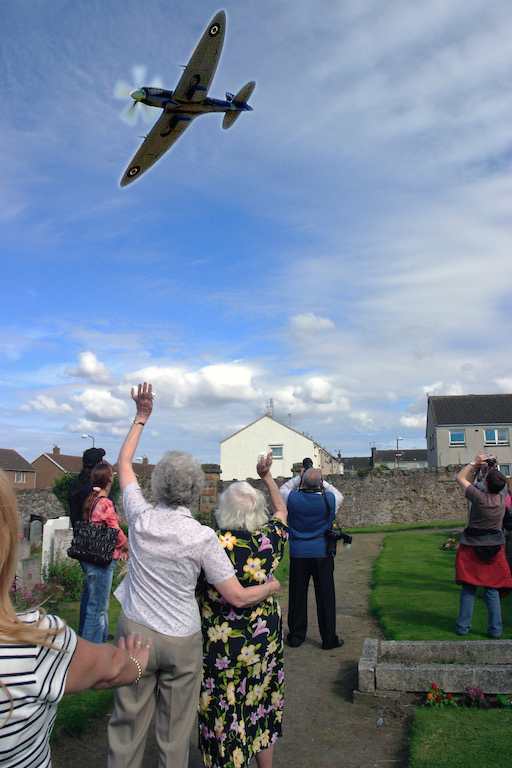
Juliette (in floral dress) watching the Spitfire tribute overfly Václav’s grave, 7th September 2007.
The aircraft wasn't quite as low as the picture suggests - some editing involved here!